

Field note no. 7
in wild nature in a pyrotechnic world

Dearest ones,
Steelhead and I celebrated the nation’s 250th looking for snowy plovers on a remote beach. Our search began among tall grasses, saltwater lagoons, and coastal scrub, with views of scattered dairy farms and a marine layer that let in a hint of the Pacific’s immense, ethereal light.
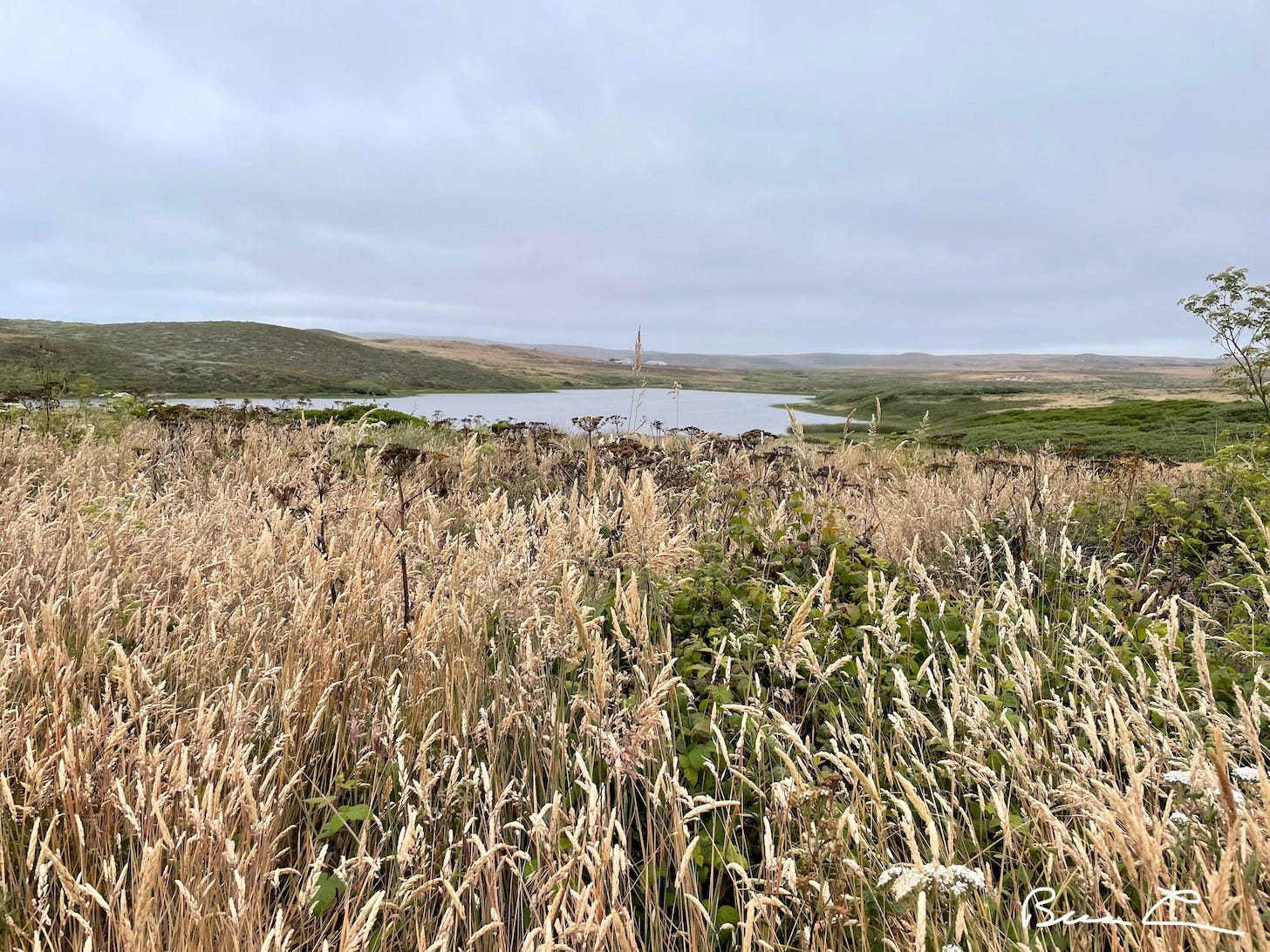
Back home we had tasks to attend to, and missives to send, and shoulds piling up like laundry, so we chose to leave it all and head for the seabirds, surf, and songbirds who were calling to us. Let the streets of America fill with cherry-bomb blasts and whistling petes. We wanted the real world.
Two watersheds away from inland towns rocked by les feux d’artifice, we entered a world muted by fog. A narrow trail led toward the beach where the tiny shorebirds we sought reside year round, though on other coasts snowy plovers do leave the ocean’s chill part of the year to breed inland.1
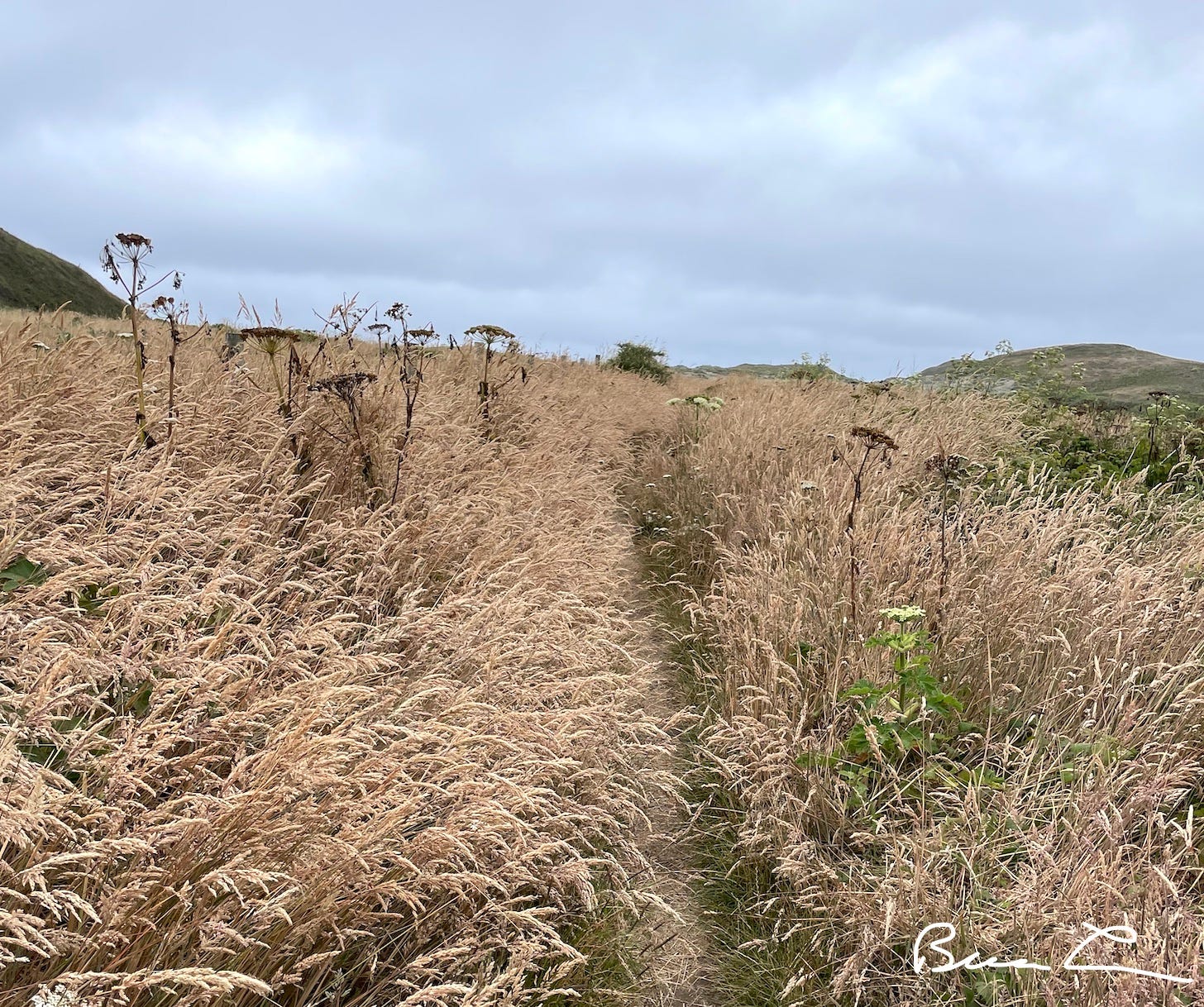
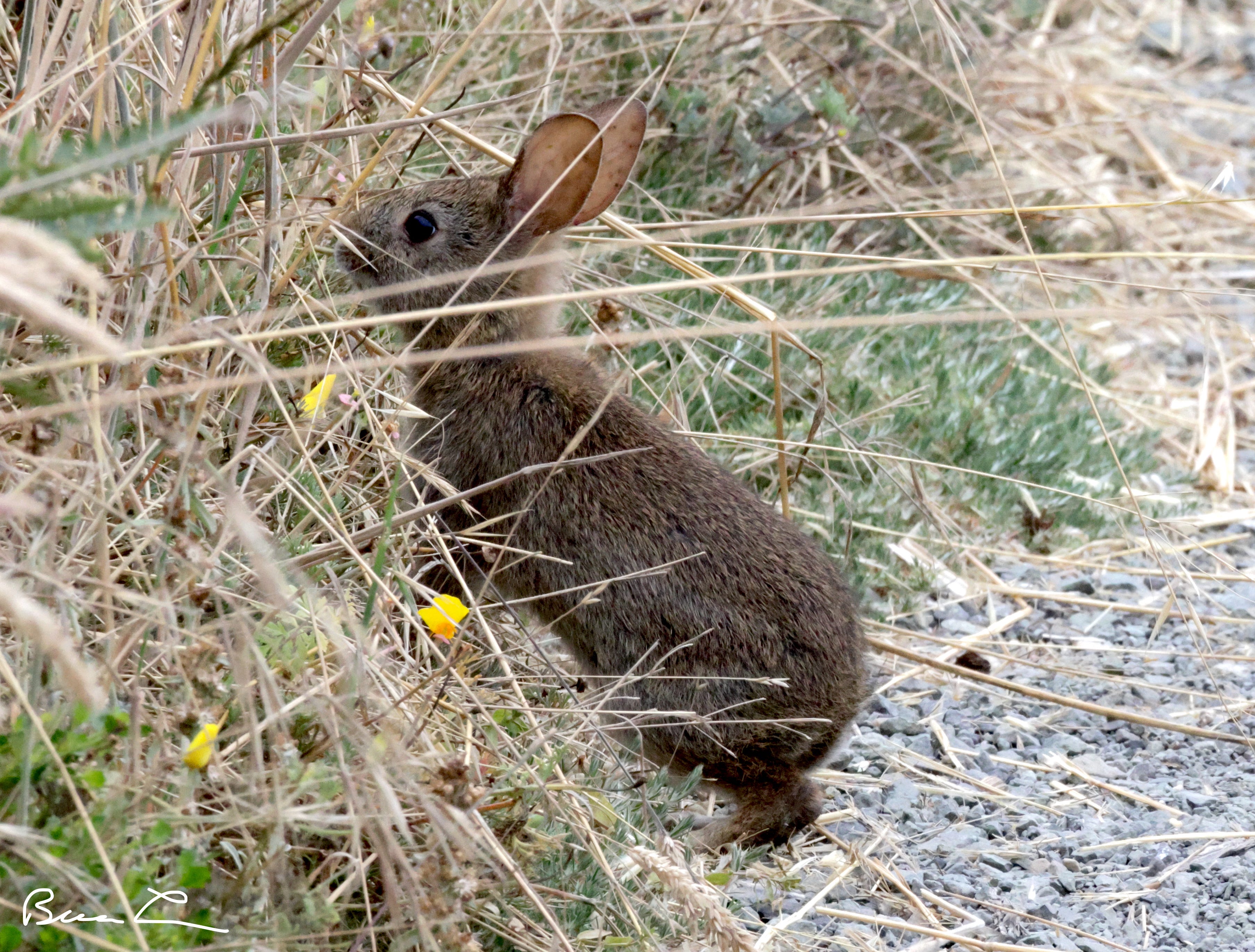
We continued to the Pacific on a path where yellow lupine buzzed with bees, a young brush rabbit pruned the poppies and trail edges, and osprey airlifted breakfast across the lagoon to nests. The doomed silver fish rode in the raptor talons as straight as plane floats, shocked awake, as the osprey provided the last and likely only aerial views of their lives.
Out by the sea, terns and osprey fished the waters both inside and outside the surf zone. We lingered at the wild shore, no other humans in sight, no sounds beside the crash of waves, cries of birds, and barks of seals.
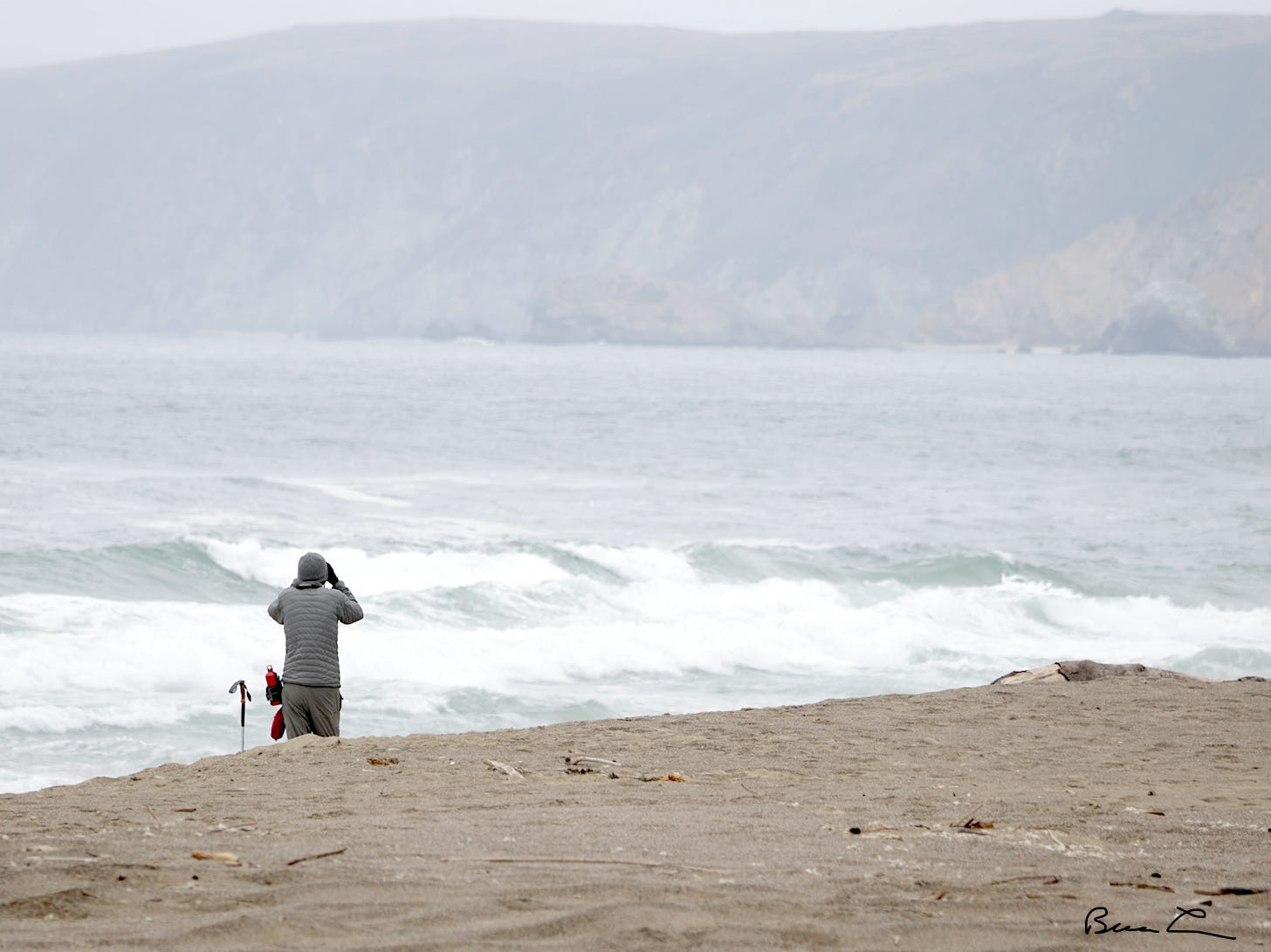
Up in the dry sand, we glassed the snowy plover pens, as always demarcated with tentative strings and poles. Not super promising, our search for a gray-and-white bird on a fogged-out field of gray, but we persevered.
Almost giving up, we glimpsed one snowy plover as he tiptoed into view. Then another passed him by. If we looked away, we had to start the search all over again, as their motion was more visible than they were. They rarely congregated, either, but scattered and skittered.
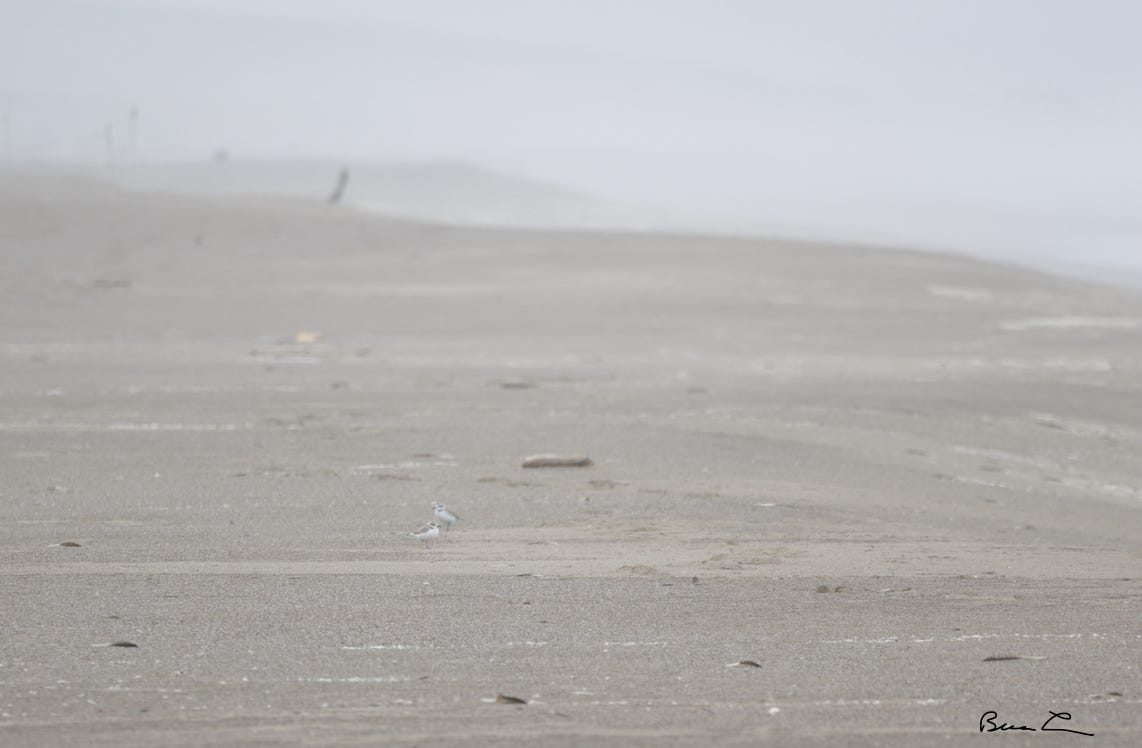
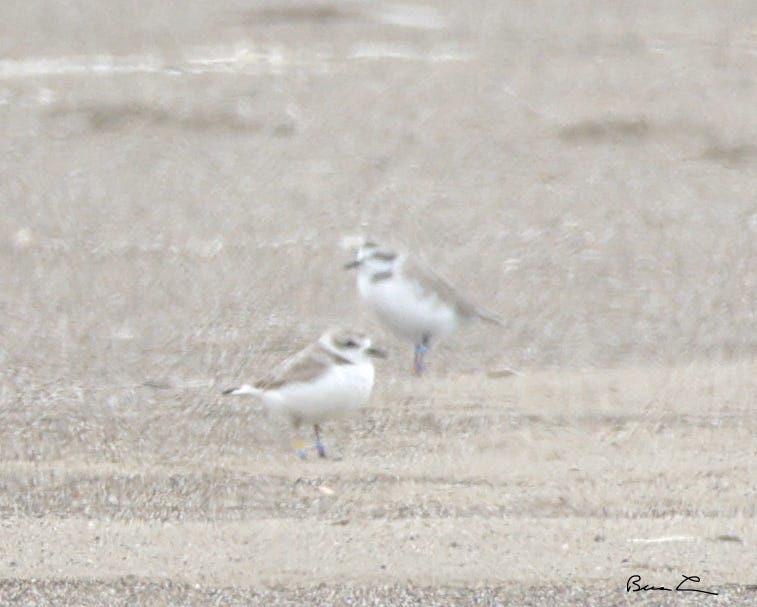
Off and on, this beach shelters a significant number of these federally threatened western snowy plovers (Charadrius nivosus nivosus). The Pacific Coast population is estimated to be around 2,500 birds.2 We were lucky at this time of year to see any, and folks we talked to later that day saw none.
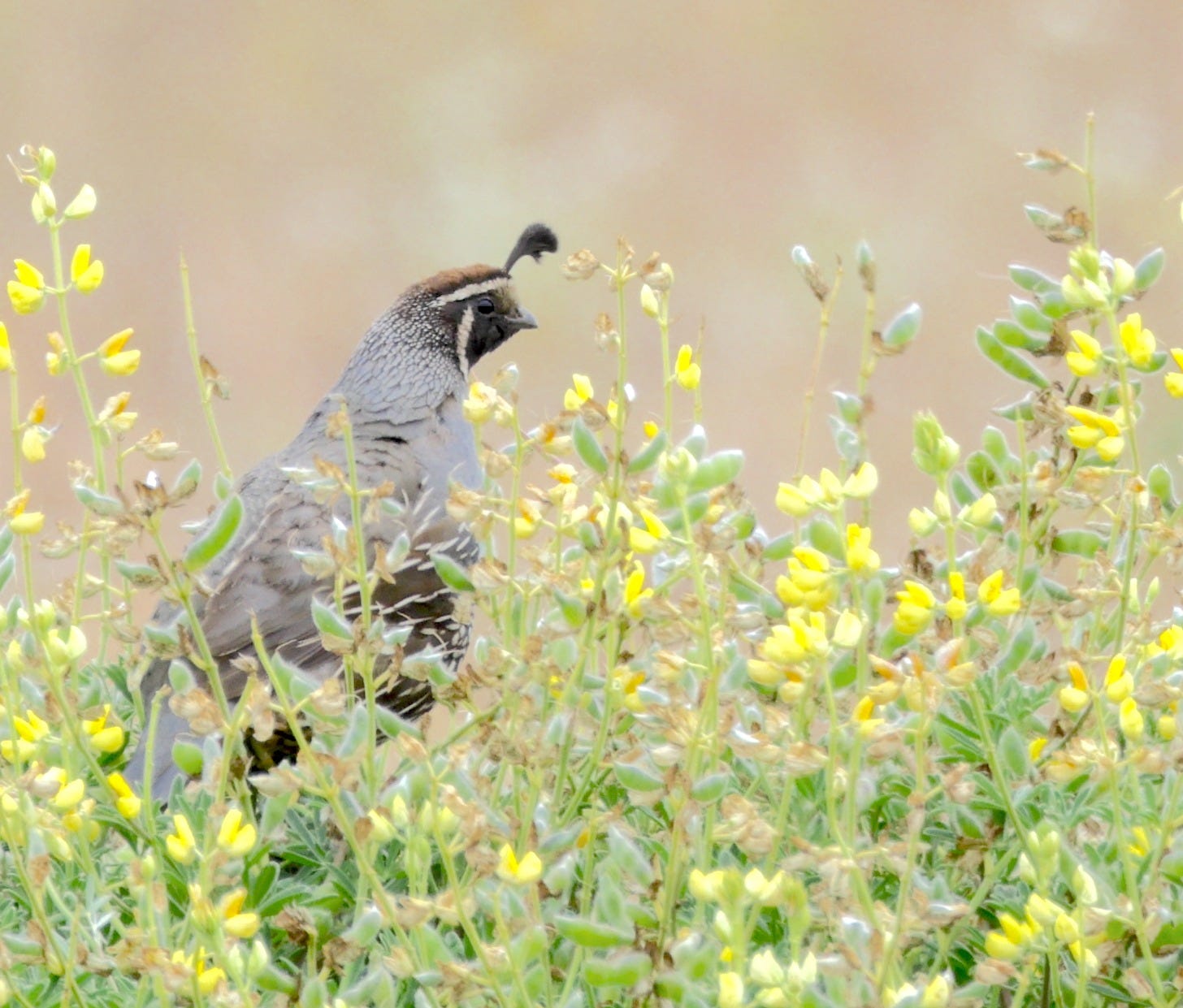
On the trail back, we greeted the inbound hikers. Sparrows and goldfinches were up and singing, and one cormorant rose and dove like a mini Loch Ness monster in the lagoon. Quail sentries secured the perimeter, rich with lupine.
We returned home a few days later, as the shotgun sounds of neighborhood bombs wound down. Our hearts remained bright, refreshed by love of place. In these times that try our souls, we’re glad we listen to those who tell us time-outs are necessary, most of all when we have no time for them.
At our busiest, our need to rest is greatest. With fire erupting all around, even when not set off by fired-up rockets and mortars, we find peace in the wild.3
Now our lights will shine early and late in our windows as we choose words and create scenes, the spirit of shorebirds and windswept sands still with us.
See you out there sometime. With love and care,

Where and when snowy plovers live. https://www.allaboutbirds.org/guide/Snowy_Plover/maps-range.
Snowy plovers are federally threatened in 1993, in response to a significant decline in the last century. The U.S. Fish and Wildlife Service has identified three factors believed to be limiting population recovery: (1) habitat loss and degradation due to beach development and invasive dune plants, (2) human disturbance, and (3) predation. “Since 1995, Point Reyes National Seashore has partnered with Point Blue Conservation Science (formerly known as PRBO Conservation Science and Point Reyes Bird Observatory) and Point Reyes National Seashore Association to implement a recovery project for the breeding western snowy plover (Charadrius nivosus nivosus) population within the Seashore.” They welcome volunteers. https://www.nps.gov/pore/learn/nature/birds_snowyplover.htm.
In our northern California county, dry as dust, six reported fires were set off by les feux d’artifice on July 4, 2026. Complaints numbered in the hundreds. Firework-related injuries in the U.S. the year before, according to the Consumer Product Safety Commission, numbered 13,000. https://www.cpsc.gov/Safety-Education/Safety-Education-Centers/Fireworks. Thirty-eight percent of injuries were to the face and hands. One-tenth were sparkler injuries. Fifteen people were killed. We at Reading Water send best wishes for your safe, sane, injury-free life.
Becca, What a beautiful window into a foggy morning on the seashore! I can almost feel the mist and the cloaked silence. And, the birds!! The perfect antidote to the chaos of a difficult 'celebration' (of what? a nation in decline?).
Clutching a fireworks. 🎇 What could go wrong?